The Indian events and wedding industry received major relief after the recent clarification by the government regarding music licensing at weddings and social celebrations. Over the past few years, many wedding organizers, banquet halls, DJs, and even families had faced confusion over whether they needed permission or paid licenses to play Bollywood and regional songs during marriage events. Several copyright agencies had also reportedly issued notices or demanded fees from venues and organizers for playing music at weddings.
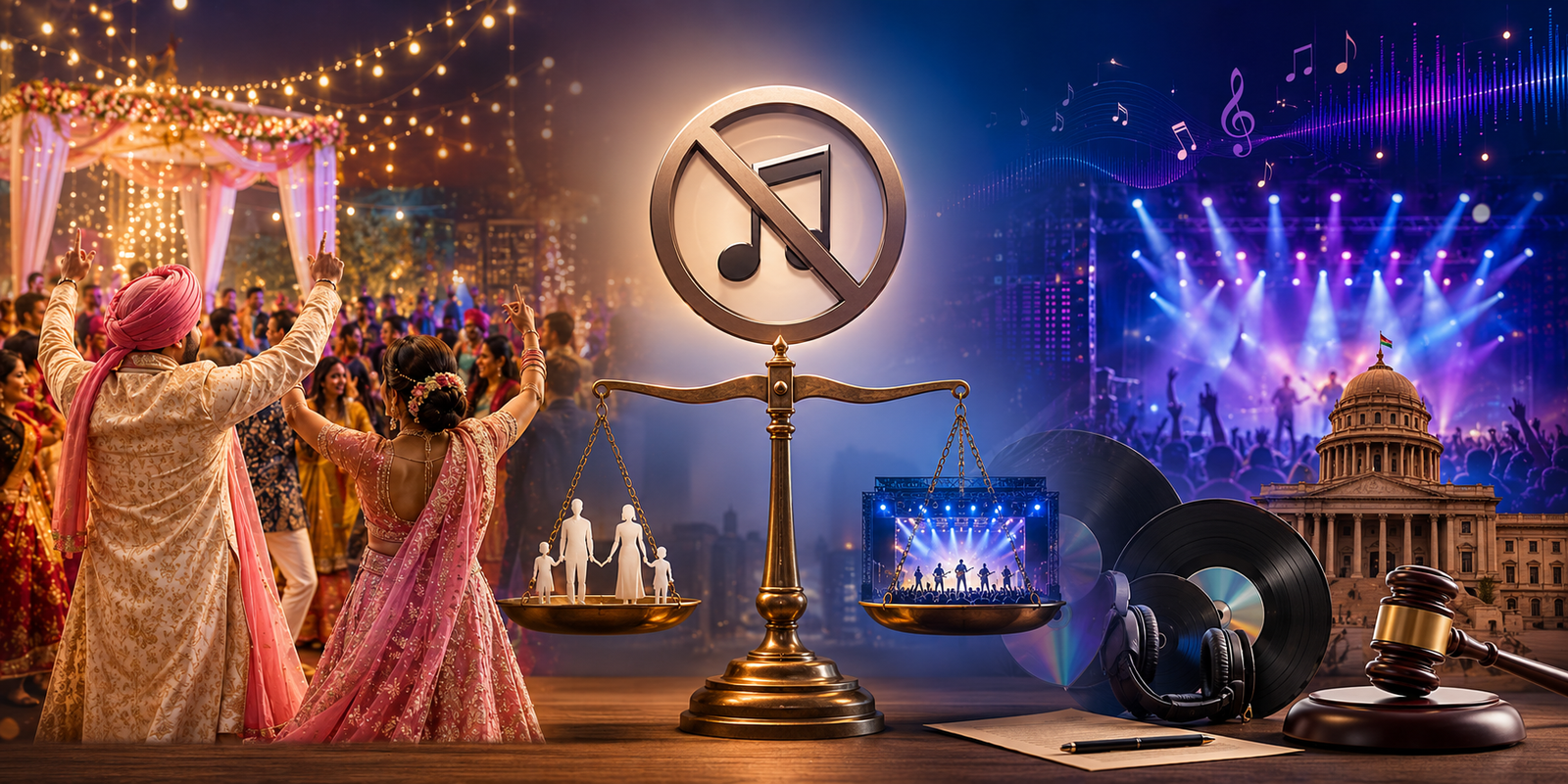
The latest clarification from the government has now made it clear that ordinary wedding celebrations and related social festivities should not be forced to obtain music licenses for playing songs. This includes functions such as marriage ceremonies, receptions, baraat processions, family gatherings, and other traditional wedding-related events. The move has been welcomed across the entertainment and hospitality industry because music is deeply connected to Indian weddings and celebrations.
However, this does not mean that all commercial music usage in India has become free. Large-scale commercial events, concerts, ticketed shows, clubs, restaurants, public entertainment venues, and brand events may still require licenses depending on the nature of the music usage. The clarification mainly protects genuine private and family-oriented wedding celebrations from unnecessary licensing pressure.
The issue became controversial because multiple copyright agencies and music rights organizations in India manage different parts of music ownership such as lyrics, compositions, sound recordings, and performer rights. Due to ongoing legal disputes and court interpretations, there was confusion about whether wedding functions qualified for exemption under Indian copyright law. The government’s latest statement attempts to create a clearer distinction between private social celebrations and commercial public performances.
For India’s growing entertainment and creator economy, this clarification is significant. It may help reduce unnecessary legal pressure on wedding organizers, local DJs, and event companies while still protecting the rights of artists, composers, singers, and music labels in commercial environments. As India’s live entertainment and digital content ecosystem continues to grow, music licensing laws are expected to evolve further in the coming years.
Major Music Licenses & Licensing Bodies in India
- Indian Performing Right Society (IPRS) – Handles composer, lyricist, and publishing rights.
- Phonographic Performance Limited (PPL India) – Handles sound recording and public performance rights.
- Novex Communications – Represents licensing rights for several major music labels.
- Indian Singers' Rights Association (ISRA) – Handles singer and performer royalty rights.
- Recorded Music Performance Limited (RMPL) – Handles public performance licensing and represents rights for multiple music labels and sound recordings in India.
As India’s entertainment and events industry continues to evolve, one thing is becoming clear the future of music licensing will be about balancing creators’ rights with practical freedom for businesses, celebrations, and cultural experiences. With weddings now receiving greater clarity, the bigger conversation around digital entertainment, live events, and music rights in India is only just beginning.